
Have you started noticing more hair in your brush, a thinner ponytail, or a little more scalp showing around your parting? First of all, please don’t panic. Menopause and hair loss are incredibly common, and you are absolutely not alone.
Menopause can bring many changes to the body, from hot flushes and sleep problems to skin changes, mood shifts, and, yes, hair thinning. The NHS lists hair thinning or hair loss as one of the symptoms that can happen during menopause and perimenopause, so if this is happening to you, there’s no need to feel embarrassed about it.
At Lacy Locks, we know how personal hair loss can feel. Whether your hair is shedding more than usual, becoming finer around the crown, or simply not feeling like “you” anymore, there are ways to support your natural hair while helping you feel more confident.
Menopause And Hair Loss: everything you need to know
In this article, we’re going to break down everything you need to know about menopause and hair loss in a way that feels simple, supportive and easy to understand.
Here’s what we’ll cover:
- Does menopause cause hair loss?
- Does hair loss from menopause grow back?
- Best menopause hair loss solutions
- How to prevent hair loss in menopause
We’ll also look at when to seek professional advice, how salon support can help, and how options such as mesh integration can support women experiencing visible thinning.
So, if your hair has started feeling finer, weaker or more delicate during menopause, this guide is here to help you understand what’s happening and what you can do next.
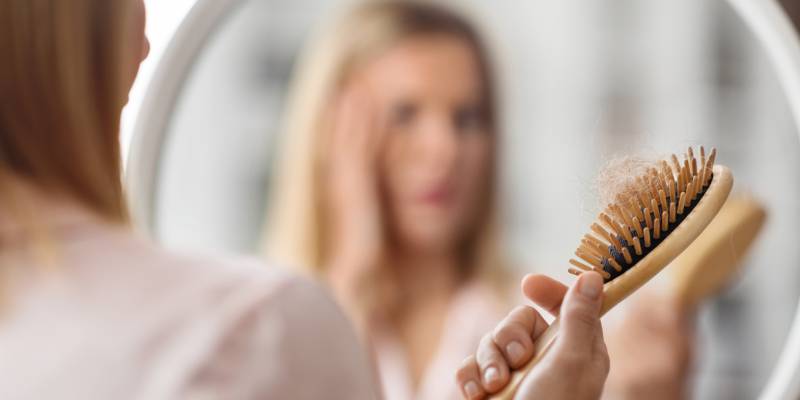
Does menopause cause hair loss?
Yes, menopause can cause hair loss, and it is a very common reason why women notice thinner hair, increased shedding or changes in texture.
During menopause, your hormone levels change quite dramatically. Oestrogen and progesterone levels begin to fall, and these hormones help support the hair growth cycle. When they drop, some hairs may spend less time in the growth phase and more time in the shedding phase.
This can lead to:
- A thinner ponytail
- More hair coming out when brushing or washing
- A wider parting
- Less volume around the crown
- Finer hair around the hairline
- Hair that feels drier, weaker or more fragile
For many women, the change is gradual. You may not wake up with dramatic hair loss, but over time, your hair might not feel as thick as it once did. Your blow-dry may fall flat quicker, your usual products may feel too heavy, or your parting may look a little wider than before.
Approximately 50% of women experience hair thinning or increased shedding during the menopausal transition. The Cleaveland Clinic also explains that menopause is a natural stage that can bring a range of physical changes, which is why hair changes during this time are so common.
One of the main reasons menopause affects hair is the shift in oestrogen and androgen levels. Androgens are sometimes called “male hormones”, but women naturally have them too. When oestrogen levels fall, androgens can have a stronger effect on the hair follicles. This may cause some follicles to shrink, leading to finer, shorter hairs over time.
This is often linked to female pattern hair loss, which typically presents as thinning across the top of the scalp rather than a bald patch. The hairline often stays in place, but the parting may look wider, and the crown can feel less dense. The American Academy of Dermatology explains that female pattern hair loss can often begin with a widening part or a thinner ponytail.
But here’s the thing: menopausal hair loss is not always just about hormones.
Other factors can also play a role, including:
- Genetics
- Stress
- Low iron levels
- Thyroid changes
- Vitamin D deficiency
- Poor scalp health
- Bleaching or over-processing
- Heat styling
- Tight hairstyles
- Not eating enough protein
- Certain medications
This is why it is important to look at the full picture. Your hair can be a little messenger for what is happening inside the body, so it is always worth speaking to a GP if your shedding feels sudden, severe or unusual. The NHS hair loss guidance is a useful place to start if you are unsure when to seek medical advice.
From a salon perspective, we also closely examine the hair itself. Sometimes, what feels like hair loss is actually breakage. This happens when the hair shaft snaps rather than sheds from the root, and it is especially common if your hair is dry, coloured, heat-damaged or lacking moisture.
At Lacy Locks, our role is to help you understand what your hair needs from a professional haircare perspective. As a trusted hair salon in Milton Keynes, we can assess your hair, talk through your concerns and recommend the best options to help your hair look and feel fuller.
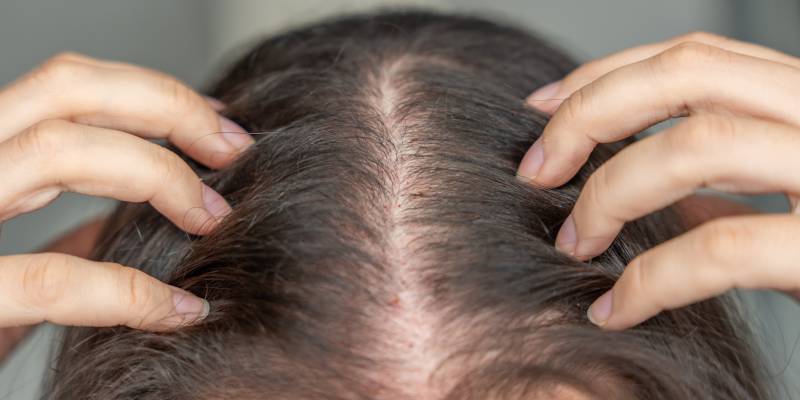
Does hair loss from menopause grow back?
This is one of the biggest questions women ask, and understandably so. When your hair starts thinning, you want to know whether it is temporary or if you need longer-term support.
The honest answer is: it depends.
In many cases, menopausal hair loss can improve, especially if it is linked to temporary shedding, stress, nutritional deficiencies or scalp issues. Your follicles usually remain alive and capable of producing hair, but regrowth depends on several factors.
Partial vs full regrowth
Many women do experience thicker, healthier-looking hair again once they start taking the right steps. This may include improving nutrition, reducing breakage, supporting scalp health, managing stress and getting professional advice.
However, your hair may not fully return to its pre-menopausal density or texture. Some women find that their hair grows back, but it feels finer than before. Others notice changes in curl, wave or texture. This can be frustrating, but it is also very normal.
Think of it less as getting your old hair back and more as learning how to care for your hair in its new chapter.
Genetics can play a role
If female pattern hair loss runs in your family, menopause can make it more noticeable. You might have had naturally thick hair for years, but as hormone levels shift, hereditary thinning can become more visible.
This does not mean there is nothing you can do. It simply means you may need a more targeted approach that combines medical advice, scalp care, gentle styling, and professional hair solutions.
Hair regrowth takes time
Right, let’s be real for a second: hair is slow.
Even when you are doing all the right things, you will not usually see a dramatic difference overnight. Visible improvements often take around 3 to 6 months to show because the hair growth cycle needs time.
This is why consistency matters. A good routine for two weeks is lovely, but it is not long enough to judge whether it is working.
When regrowth may be limited
There are some situations where natural regrowth may be more limited. For example, if the follicle has miniaturised due to female pattern hair loss, the new hair may continue to grow back finer unless treated. If there is an underlying medical condition, you will need specialist advice.
At Lacy Locks, we offer tailored hair loss solutions in Milton Keynes for women experiencing thinning, shedding or loss of confidence due to changes in their hair. Depending on your hair, scalp and goals, we may recommend options such as professional extensions, volumising methods or mesh integration.
For clients with visible thinning or more delicate areas, our mesh integration in Milton Keynes can be a beautiful option. It is designed to work with your natural hair to create coverage, volume and a seamless finish, helping you feel more like yourself again.
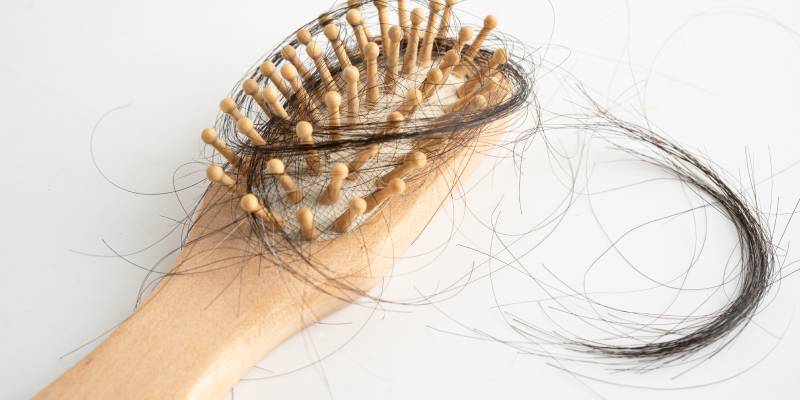
Best menopause hair loss solutions
The best menopause hair-loss solutions usually combine several factors. There is rarely one magic product or habit that fixes everything on its own. Instead, the most effective approach tends to include medical advice, scalp care, lifestyle support and gentle salon care.
Speak to your GP or a medical professional
Before changing everything in your hair routine, it is a good idea to speak to your GP, especially if your hair loss feels sudden, excessive or patchy.
They may check for possible causes such as:
- Low iron
- Thyroid imbalance
- Vitamin D deficiency
- Hormonal changes
- Medication side effects
- Autoimmune conditions
- Stress-related shedding
This step is so important because treating the root cause can make a big difference. For example, if low iron is contributing to shedding, no shampoo in the world will fully solve the issue until your iron levels are addressed.
Your GP may also be able to talk to you about menopause support, including hormone replacement therapy if it is suitable for you. HRT is not specifically a hair loss treatment, but it may form part of a wider conversation about hormone balance. You can find more general information on the NHS menopause treatment page.
mesh integration
If you have more visible thinning, especially around the crown or top of the head, mesh integration is a fantastic option. This method is designed to create natural-looking coverage and fullness by integrating your own hair with a lightweight mesh system.
At Lacy Locks, we always start with a proper consultation. We look at your natural hair, scalp, lifestyle, and goals before recommending anything. Your hair health always comes first.
Crown volumiser
If your thinning is mainly around the crown, parting or top of the head, our crown volumiser can be a great option to consider. Unlike a full hair system, a crown volumiser is designed to add coverage and fullness exactly where you need it, while still blending with your own natural hair.
This can be especially helpful during menopause, when hair may become finer around the top of the scalp but still feel strong through the sides and ends. A professionally fitted crown volumiser can help create the appearance of thicker, fuller hair without putting unnecessary strain on fragile areas.
At Lacy Locks, we would always recommend a consultation first to check your natural hair, scalp condition and lifestyle before deciding whether a crown volumiser is the right choice. The aim is always to create a soft, natural-looking result that helps you feel more confident while keeping your hair health as the priority.
Consider professional extensions
For some women, the best solution is not just about regrowth. It is also about feeling confident right now.
If your hair is generally thinner but still strong enough, carefully fitted hair extensions may help add volume and shape. The key is making sure they are fitted by a trained professional who understands fine or thinning hair.
If you’re unsure which method may be suitable for finer hair, our guide to the best hair extensions for thin hair explains the different options in more detail.
Focus on scalp health
A healthy scalp creates a better environment for healthy hair growth. Think of your scalp like skincare for your hair. If the scalp is congested, irritated, oily or very dry, your hair may not feel its best.
Simple scalp care steps can include:
- Washing your hair regularly enough for your scalp type
- Avoiding heavy product build-up around the roots
- Using gentle scalp massage when shampooing
- Rinsing products thoroughly
- Keeping extensions or hair systems properly maintained
- Booking professional advice if your scalp feels itchy, sore or flaky
Choose nourishing haircare products
Menopausal hair often feels drier, finer or more fragile, so the products you use really matter.
Look for products that help with:
- Moisture
- Shine
- Smoothness
- Gentle cleansing
- Detangling
- Heat protection
- Frizz control
- Scalp comfort
If you wear extensions or have a hair system fitted, you will need products that are suitable for both your natural hair and the added hair. Regal Envy’s Hair Extensions Shampoo and Hair Extensions Conditioner are lovely options for keeping extensions nourished without making them feel heavy.
For dry or brittle ends, a small amount of nourishing oil can also help smooth the hair and add shine. Regal Envy’s Argan Oil Hair Treatment can be used on the mid-lengths and ends to help hair look more polished.
Support your hair from the inside
Your hair needs nutrients to grow well, so it is worth supporting your body and your haircare routine.
Try to include:
- Protein-rich foods such as eggs, fish, chicken, beans, lentils and Greek yoghurt
- Iron-rich foods such as leafy greens, red meat, beans and fortified cereals
- Healthy fats from avocado, nuts, seeds and oily fish
- Plenty of water
- Vitamin-rich fruit and vegetables
Supplements can be useful for some people, but it is best to check with a healthcare professional first, especially if you are taking medication or have any health conditions.
Be gentle with colour and heat
When hair is already thinning or fragile, heavy bleaching, frequent colour changes and daily heat styling can make things worse. This does not mean you can never colour or style your hair again. It just means your hair may need a softer approach.
Try:
- Lowering the heat on styling tools
- Always using heat protection
- Reducing how often you straighten or curl
- Choosing softer colour techniques
- Avoiding overlapping bleach
- Having regular trims to remove weak ends
- Using professional treatments when needed
If you want to understand more about how your hair absorbs moisture and products, Lacy Locks’ article on what hair porosity is is a really useful read. Porosity can affect how dry, damaged or frizzy your hair feels.
How to prevent hair loss in menopause
While you may not be able to prevent every hormonal change that happens during menopause, you can take steps to reduce avoidable shedding, protect your hair from breakage and support healthier growth.
The aim is not perfection. It is about creating a routine that works with your hair, not against it.
Avoid tight hairstyles
Tight ponytails, buns, braids and extensions can put pressure on the hair follicles. Over time, this can contribute to traction alopecia, especially around the hairline and temples.
Try switching to loose ponytails, soft scrunchies, claw clips, low buns, gentle plaits and styles that do not pull at the scalp. If your scalp feels sore after wearing a style, that is usually a sign it is too tight.
Brush gently
Menopausal hair can feel more delicate, so brushing needs to be gentle. Start at the ends and work your way up slowly, especially if your hair tangles easily.
Avoid ripping through knots, brushing aggressively when wet or using poor-quality brushes that snag. If you have extensions fitted, use a suitable extension brush and follow your aftercare advice carefully.
Keep your scalp clean but not stripped
A clean scalp is important, but over-washing with harsh products can leave your hair feeling dry and your scalp irritated.
The right wash routine depends on your hair type, scalp type and whether you wear extensions. The goal is balance. Your scalp should feel fresh, but your hair should not feel squeaky, tight or straw-like afterwards.
Minimise breakage
Breakage can make hair look thinner even when the follicle is still producing hair. This is why caring for the lengths and ends is just as important as focusing on the scalp.
To reduce breakage:
- Use conditioner after shampooing
- Detangle gently
- Sleep on a silk or satin pillowcase
- Avoid going to bed with wet hair
- Use heat protection
- Have regular trims
- Avoid over-processing
- Keep your hair moisturised
These little habits might sound simple, but they can make a huge difference over time. The American Academy of Dermatology also recommends treating thinning hair gently, as fragile hair can be more easily damaged.
Manage stress where possible
We know, we know — easier said than done! But stress can contribute to shedding, especially when the body is already going through hormonal changes.
You do not need to overhaul your life overnight. Small changes can help, such as getting outside for a walk, prioritising sleep where possible, taking a few minutes to breathe, eating regularly, asking for support and booking time for yourself.
Get professional advice early
If you are noticing thinning, please do not wait until you feel really upset before asking for help. Early advice can make the whole process feel much less overwhelming.
A professional stylist can help you determine whether your hair is shedding, breaking, or thinning due to density changes or simply a change in texture. They can also recommend styles, products and treatments that make your hair easier to manage.
At Lacy Locks, we are here to support you with kindness, honesty and professional knowledge. No judgement, no pressure, just real advice based on your hair.
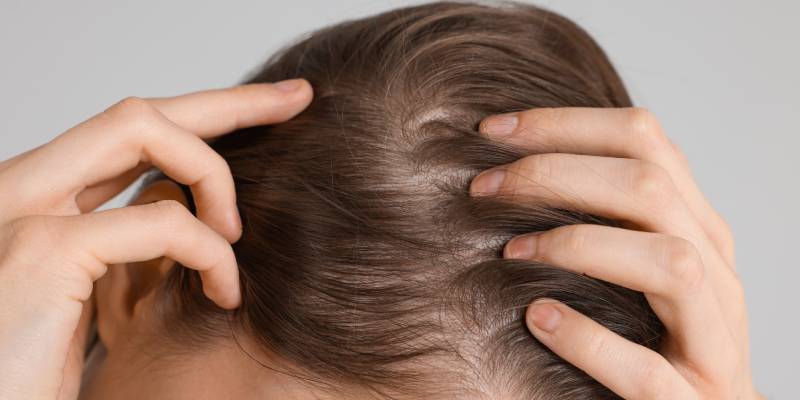
Feel Confident In Your Hair Again
Menopause and hair loss can feel emotional, frustrating and, honestly, a little unfair. One minute, your hair feels like it has always behaved a certain way, and the next, it is shedding, thinning, drying out or refusing to hold the same styles.
But there are options.
Menopause can cause hair thinning due to hormonal changes, but genetics, stress, nutrition, scalp health, and breakage can also contribute. Some women will see regrowth, especially with the right support, but it can take 3 to 6 months to notice visible changes. Others may need longer-term solutions to help create fullness, coverage and confidence.
The most important thing is not to ignore it. Get medical advice if your hair loss feels sudden or severe, support your scalp, be gentle with your hair and speak to professionals who understand how personal this journey can be.
At Lacy Locks, we offer supportive consultations and tailored solutions for women dealing with thinning hair, hair loss or loss of confidence. Whether you need advice on your natural hair, help choosing the right products, or want to explore professional options such as extensions or mesh integration, our team is here to help you feel gorgeous again.
Ready to chat about your hair? Book a consultation with Lacy Locks today, and let’s find the best way to support your hair through this new chapter.
Contact One Of Our Experts Today
Make sure to leave your details below, and you’ll hear from us shortly.